Men's Sexual Health & Wellness Devices - Bathmate REVIEW
Discover our trusted Bathmate review covering its product range, hydro pump technology, quality, support, pros and cons. Save 10% with code CAITLIN10.
Read Review ->Health & Wellness, Lifestyle
Explore Bink Made's glass water bottles, hydration tracking, sizes, cap styles, stainless steel options, pricing, and everyday practicality.
Some everyday objects are designed to disappear into the background. Others become such a natural part of our routines that we start noticing when they are missing. A reusable water bottle might seem like a small thing, but when it looks appealing, feels comfortable, and fits into the rhythm of your day, reaching for it can become almost automatic.
That is the idea behind Bink, a design-focused drinkware brand that has brought a distinctive perspective to everyday hydration. Its recognizable glass bottles, colorful silicone sleeves, and simple water-tracking markings offer an alternative to oversized stainless steel tumblers and conventional plastic bottles.
Yet beautiful design alone does not necessarily make a great water bottle. Capacity, portability, cleaning, durability, temperature retention, and replacement options all influence whether a product remains useful after the initial excitement fades.
This Bink review explores how the brand's most recognizable products work, what makes them different, and which bottles make the most sense for different lifestyles.
Bink's identity begins with an approach to design that treats practical objects as part of everyday living. Founded in 2021 by Leslie and Ben, the brand was built around the idea that useful products can also feel attractive, intentional, and enjoyable to use. Rather than concentrating exclusively on technical specifications, Bink brings together elements of fashion, wellness, utility, and contemporary product design.
That philosophy is immediately visible in its bottles. The rounded silhouettes, understated branding, and carefully selected colors distinguish Bink from the aggressively athletic appearance of many traditional hydration products. Shades such as Butter, Coco, Stone, Black Cherry, and Cobalt give customers options that feel closer to personal accessories than ordinary water containers. The result is a recognizable visual identity without requiring complicated decoration.
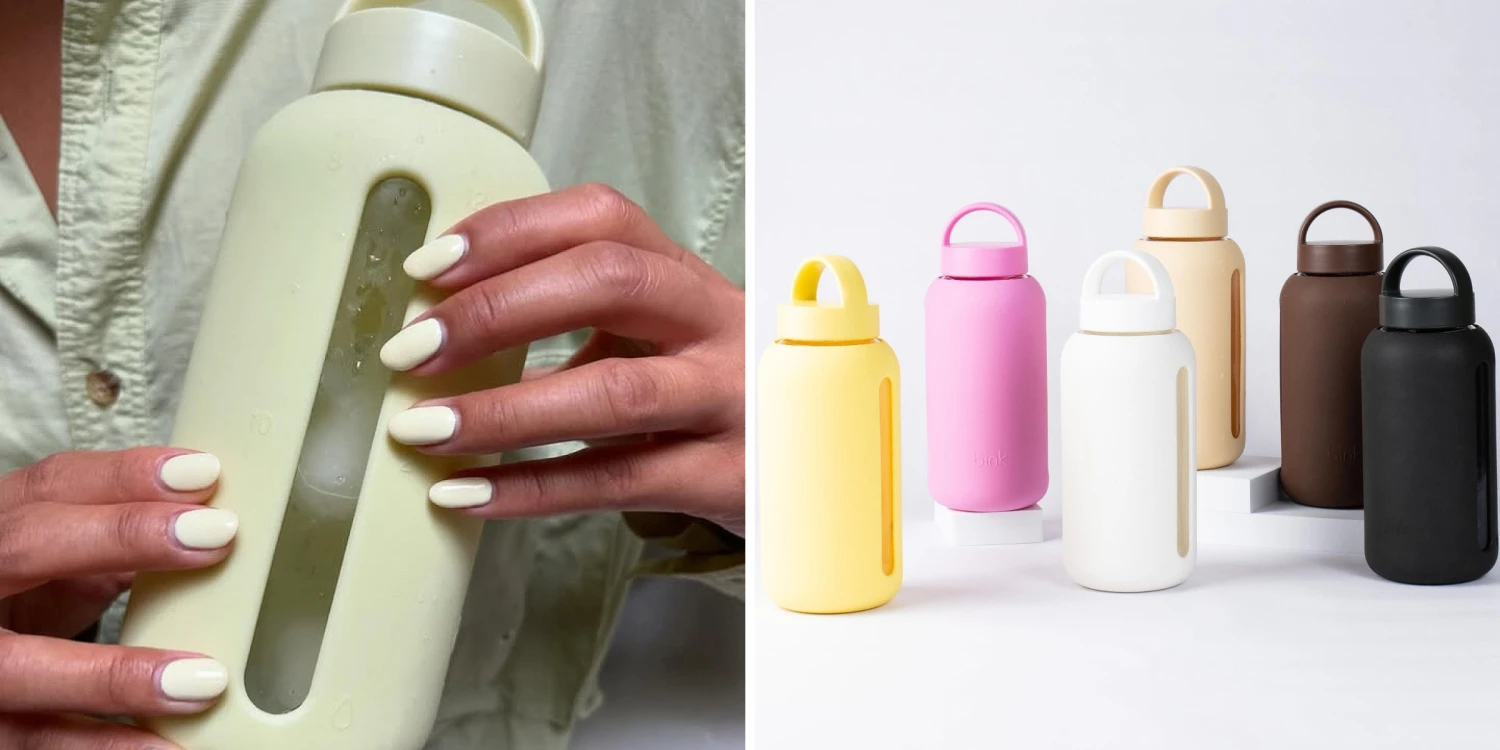
What makes this approach more interesting is that the aesthetic serves a practical purpose. An attractive bottle may be more likely to remain on a desk, kitchen counter, or bedside table instead of being put away. Having water visible and easily accessible can make regular drinking more convenient, even though appearance alone does not guarantee a change in behavior.
Bink's expanding product collection reinforces this philosophy. Glass bottles remain central to the brand, but insulated steel bottles, tumblers, cups, and accessories now extend the same design language into different settings. The underlying idea stays consistent: everyday essentials should be functional enough to use repeatedly and appealing enough to keep around.
The Bink Day Bottle 27oz captures the brand's identity particularly well. With a capacity of approximately 800ml, it combines a thick borosilicate glass interior, a protective silicone exterior, and a distinctive vertical viewing window. The construction creates a soft, comfortable exterior while preserving the familiar experience of drinking from glass.
Its most recognizable feature is the set of AM/PM hydration markings built into the silicone sleeve. These markings create a visual timeline throughout the day, making it easier to notice how much water remains and whether the bottle needs refilling. Unlike electronic hydration trackers, the system requires no charging, application, Bluetooth connection, or complicated setup.
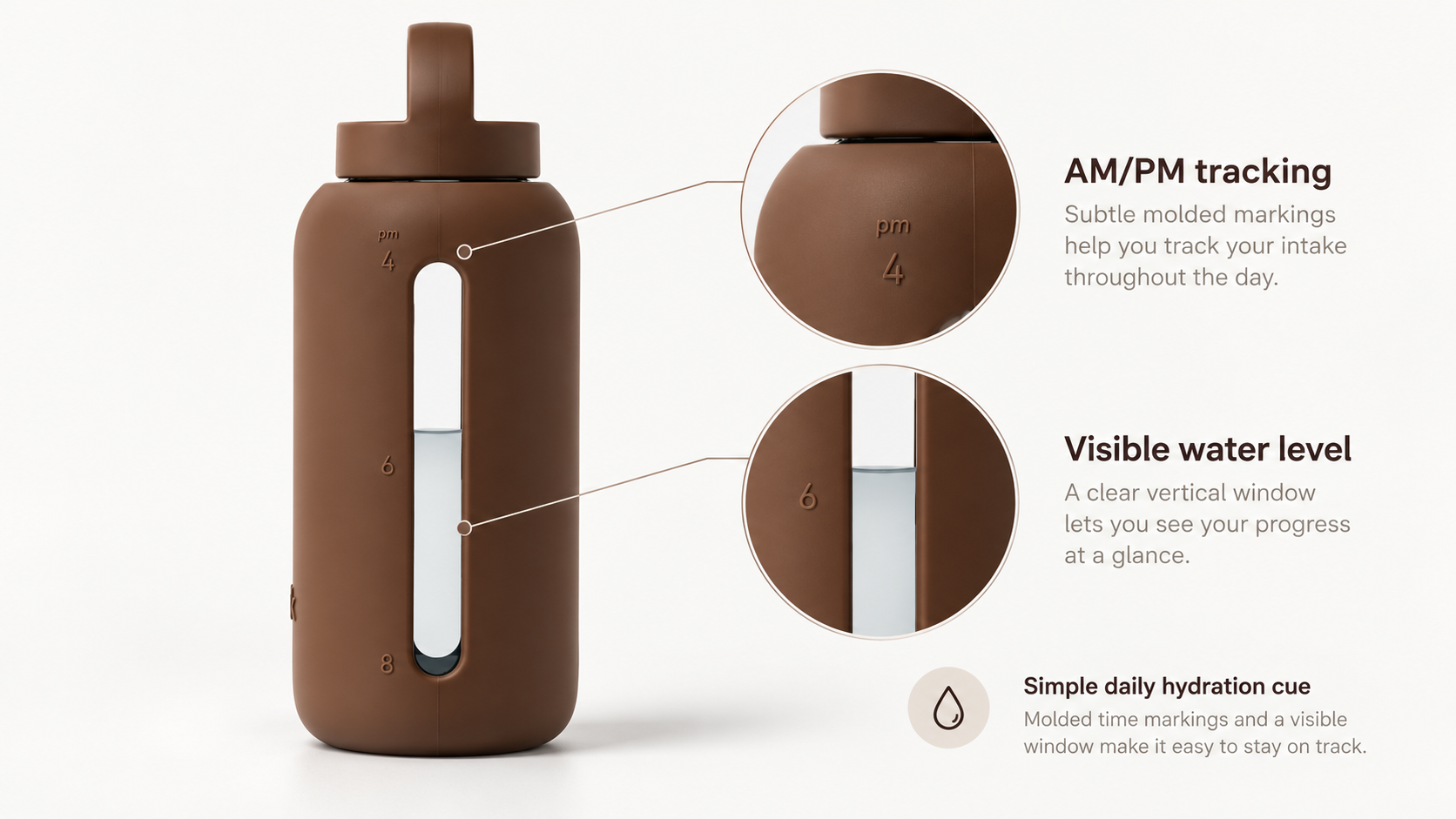
The practical appeal lies in the simplicity of the reminder. Someone working at a computer can glance at the bottle between tasks, while a person studying or spending time at home can use the markings as a gentle prompt to drink. This makes the tracking feature more approachable than systems requiring users to record every glass of water manually.
However, the markings should be treated as a convenient reference rather than a universal hydration prescription. Individual water requirements vary according to activity, climate, diet, health conditions, and other factors. The bottle helps visualize a routine, but it cannot determine the medically appropriate amount of water for every person.
Bink also offers the 27oz model with different drinking caps, allowing customers to choose between a traditional opening, a flip spout, and a straw-based design. This combination of straightforward tracking and customizable drinking styles is what makes the Day Bottle more interesting than a conventional glass container.
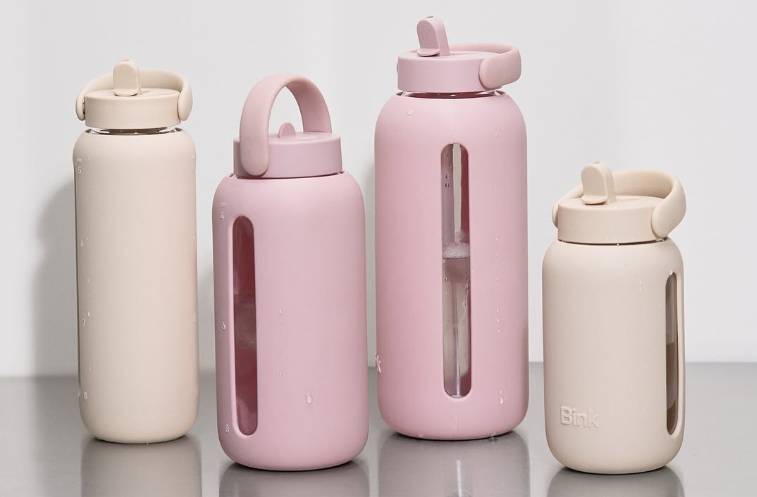
Choosing the right Bink bottle involves more than deciding which color looks best. Capacity affects how frequently the bottle needs refilling, how comfortable it feels to carry, and where it can be placed throughout the day. Bink's main glass bottle range includes four particularly relevant sizes, each with a different practical advantage.
The Mini Bottle 17oz, approximately 500ml, is the most compact option in the main glass lineup. Its smaller profile suits shorter outings, bags with limited space, or buyers who prefer a lighter container. The Day Bottle 21oz, approximately 621ml, provides additional capacity while remaining compatible with standard car cup holders according to Bink's product guidance.
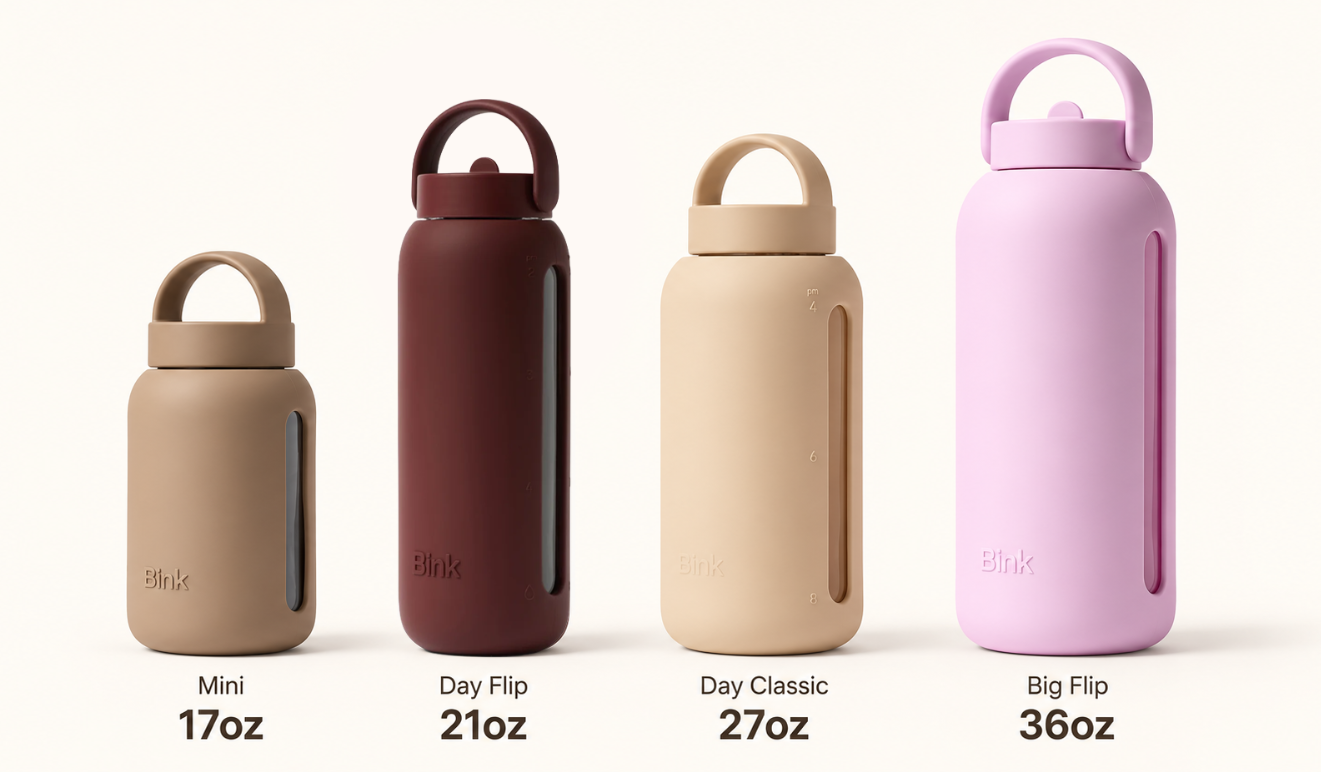
The Day Bottle 27oz offers an appealing middle ground for people who spend long periods at a desk or want a substantial amount of water nearby. It provides more capacity without entering the especially large-bottle category. However, its wider body does not fit standard car cup holders, an important consideration for frequent drivers. Bink sells a separate cup-holder accessory for customers who prefer the larger size.
At the other end of the range, the Big Bottle 36oz, approximately 1,064ml, is intended for people who prioritize capacity and fewer refills. That can be convenient during long study sessions or when a water source is not immediately nearby, although the larger glass construction naturally requires more space and careful handling.
For most buyers, the best decision comes from matching bottle size to actual habits. Someone commuting by car might benefit more from the 21oz version than the larger 27oz bottle, even if the latter appears more appealing in photographs. Buyers can compare the current configurations directly through Bink before choosing a size.
One of Bink's most useful design decisions is offering different drinking experiences within the same recognizable bottle family. While the glass construction and silicone exterior attract attention, the cap determines how the bottle feels during repeated daily use. This detail matters because even an attractive water bottle can become inconvenient when its drinking mechanism does not suit the owner.
The Classic Cap is the simplest interpretation of the Day Bottle. It features a traditional screw-on carry cap and wide drinking opening, making it well suited to customers who enjoy drinking directly from a glass bottle. With fewer moving parts than a spout or straw design, it also offers a relatively straightforward cleaning experience.
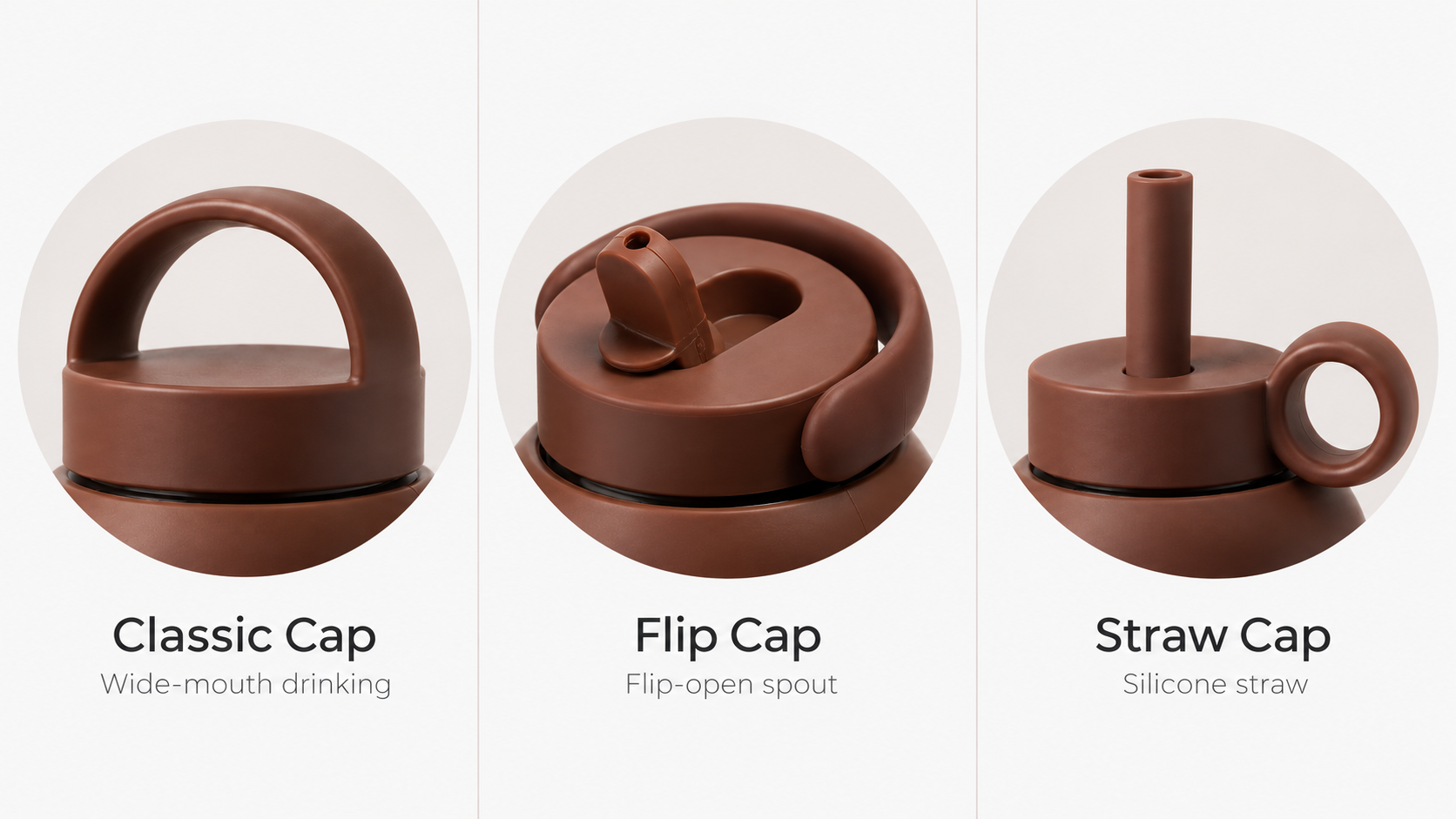
The Flip Cap offers a more convenient alternative for people who prefer drinking through a dedicated spout. Bink describes its current Flip Cap designs as leak-proof and includes a rotating carry handle and removable internal sealing ring. This configuration can be particularly appealing when moving between rooms, carrying the bottle to work, or drinking without removing the entire cap.
Meanwhile, the Straw Cap is designed for customers who prefer sipping through a straw. It offers a different drinking posture and can feel more convenient when a bottle is sitting nearby during extended work sessions. The tradeoff is that straws and internal components require attentive cleaning, particularly when the bottle is used for beverages other than water.
None of these designs is universally superior. Buyers who value minimal maintenance may favor the Classic Cap, while those looking for quick access could prefer the Flip Cap. Straw enthusiasts may find the Straw Cap most natural. Checking the exact cap included with a selected bottle is important because configurations and compatibility can differ.
Bink's glass construction is one of its strongest distinguishing features. The brand uses borosilicate glass, a material commonly selected for its thermal resistance and suitability for reusable drinkware. For customers who prefer drinking from glass rather than plastic or metal, this creates a meaningful reason to consider Bink beyond its appearance.
The protective silicone sleeve adds another dimension to the experience. It provides a textured gripping surface, helps cushion everyday contact, and gives the bottle its distinctive color. The vertical window allows users to see the remaining water, while the sleeve covers much of the glass exterior. These details make the Day Bottle feel deliberately designed rather than simply decorated.
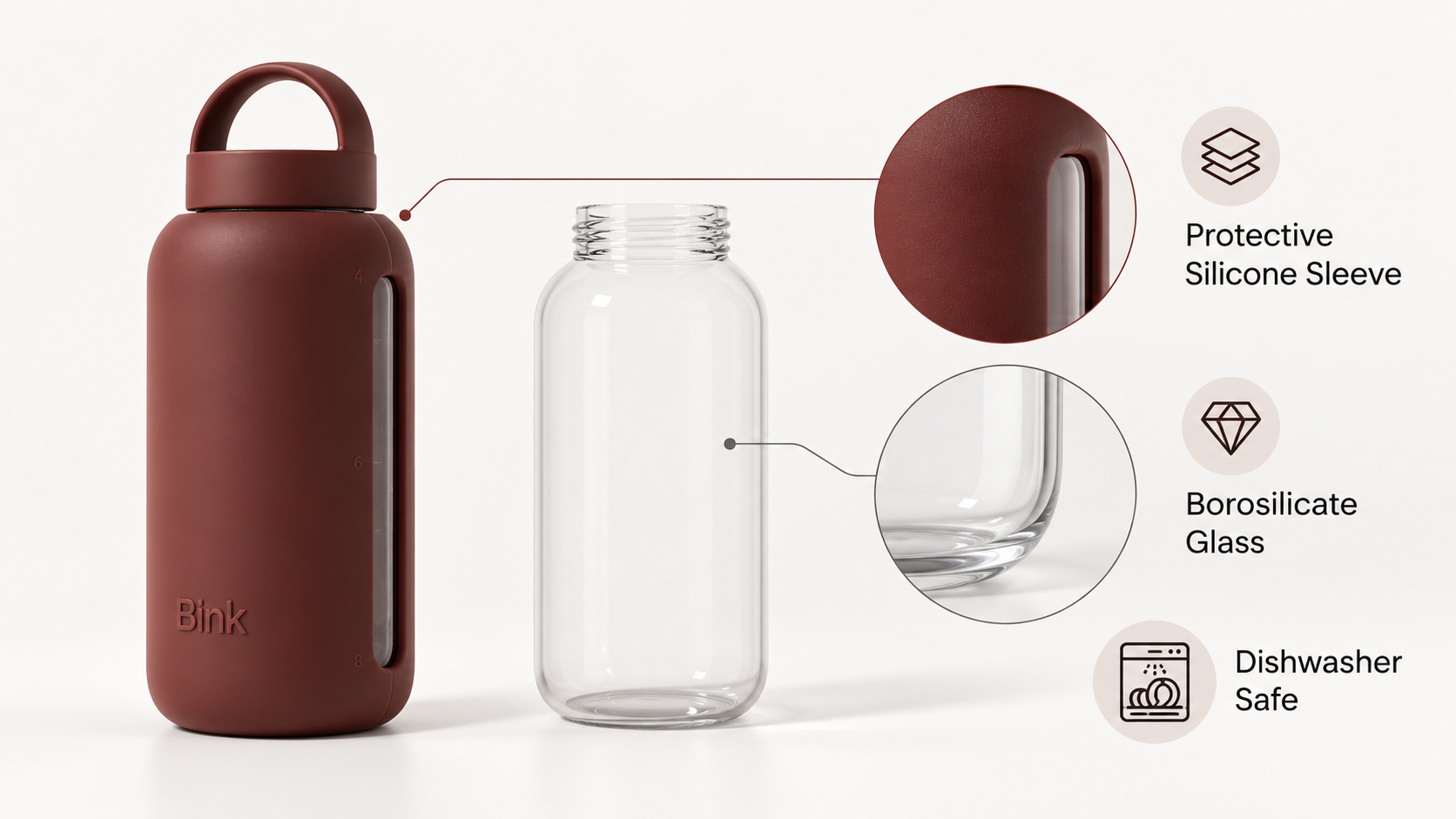
There are practical limitations worth understanding. Although borosilicate glass can tolerate temperature variation better than some conventional glasses, it is not shatterproof. Dropping the bottle onto a hard surface can still cause breakage, even with its silicone protection. Bink also advises against pouring boiling water directly into its bottles, so the material should not be treated as permission for unrestricted temperature exposure.
Cleaning is generally straightforward because Bink lists its bottles and most accessories as dishwasher-safe, with wrist straps excluded. Nevertheless, keeping the bottle properly maintained may require attention to the silicone sleeve, cap seals, and any drinking straw. An independent Business Insider reviewer also reported that the silicone exterior could collect debris and that removing the sleeve required some effort.
These considerations do not undermine the appeal of the design, but they help establish realistic expectations. Bink glass bottles make the most sense for customers who enjoy the feel and appearance of glass and are comfortable giving it the care that the material requires.
Bink's move into stainless steel drinkware creates an interesting choice for customers who appreciate the brand's aesthetic but have different performance priorities. The original glass Day Bottle emphasizes visible hydration tracking and the experience of drinking from glass. The stainless steel collection addresses situations where temperature control, portability, or durability may be more important.
The Stainless Straw Cap 24oz offers a particularly practical alternative. It uses double-wall vacuum-insulated stainless steel construction, incorporates a straw-based drinking system, and is designed to fit standard car cup holders. Bink advertises temperature retention of up to 24 hours for cold drinks and 12 hours for hot drinks, although actual results depend on environmental conditions and how the bottle is used.
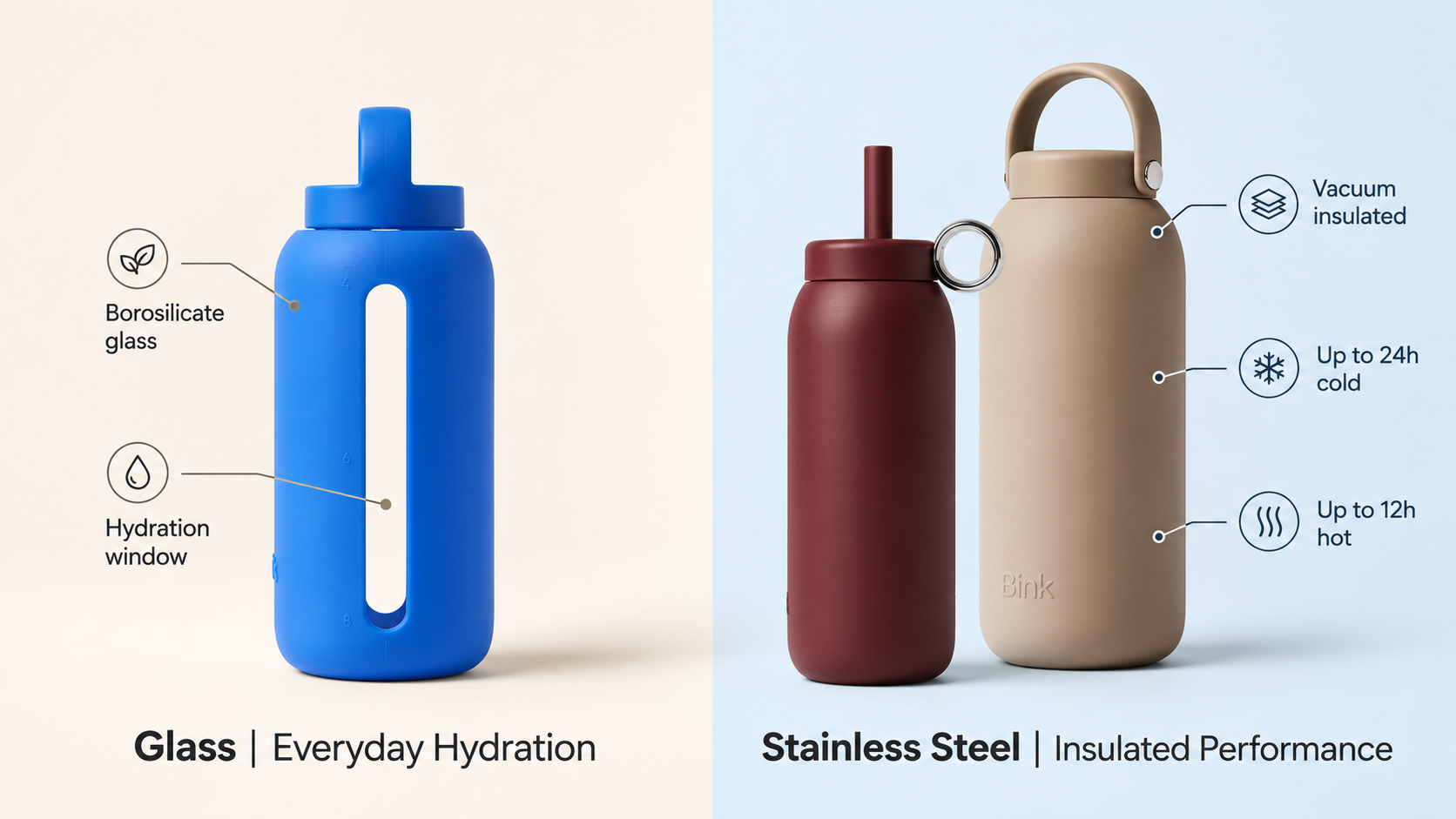
For customers who want more capacity, the Stainless Chug Cap 32oz provides a larger insulated option with a different drinking mechanism. These steel models broaden Bink's appeal beyond buyers specifically searching for glass water bottles. They are especially relevant for commuting, outdoor activities, or warm environments where keeping water cold is a priority.
Interestingly, the decision does not always favor glass or steel on price alone. Bink lists its 24oz stainless steel bottles around $36 and its 32oz options around $40, placing them near several of the glass Day Bottle configurations. The more meaningful distinction is therefore how each bottle will actually be used.
A glass Day Bottle may be the more satisfying choice for someone who enjoys seeing the water level and prefers glass for daily desk use. A stainless steel bottle may provide better value for someone whose primary needs are temperature retention and easy travel. Bink's advantage is that both experiences are available within a consistent design family.
Although the Day Bottle remains central to Bink's identity, the wider collection shows that the brand is not limited to one style of drinking water. Its expanding range includes smaller children's bottles, straw tumblers, insulated drinkware, and glass cups. Rather than simply changing the size of an existing product, these categories address different routines and drinking preferences.
Bink's Kids Bottles come in 10oz and 17oz capacities, offering smaller alternatives to adult-sized glass bottles. For families considering these products, capacity is only one factor. The child's age, ability to carry and handle glass safely, and the need for adult supervision should also influence the decision. A smaller bottle is not automatically suitable for every child or environment.
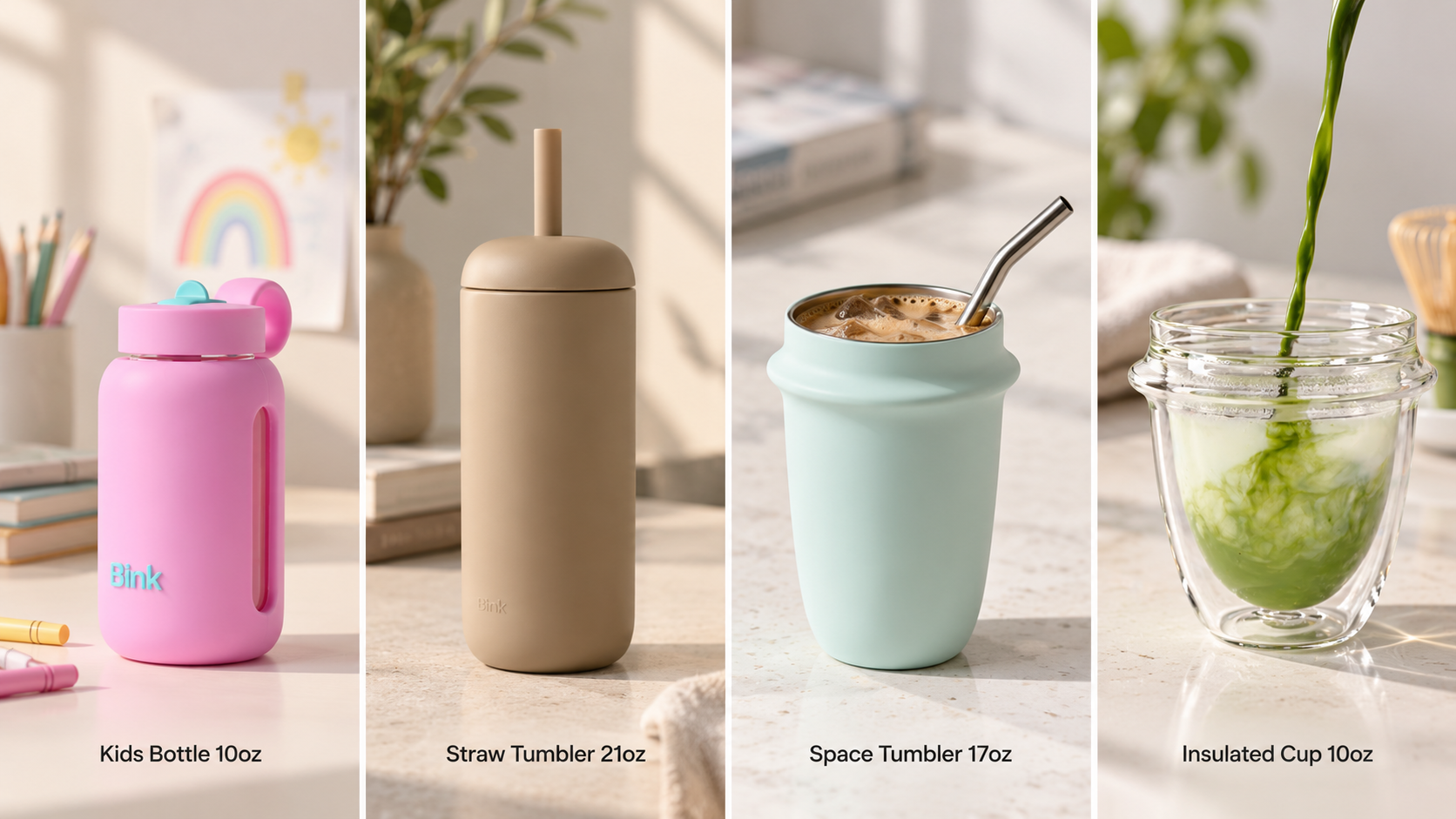
The Straw Tumbler 21oz offers another approach to casual hydration, while the Space Tumbler 17oz extends the collection into a different everyday drinking format. Bink also offers 10oz insulated cups and 12oz table cups, giving customers options better suited to shorter drinks, home use, or a coordinated drinkware collection.
What connects these products is the brand's approach to color, shape, and usability. Someone who appreciates Bink's design language can explore drinkware for different settings without abandoning the aesthetic that originally attracted them. This is appealing for gift shopping and coordinated household essentials, although purchasing matching products is entirely optional.
The broader ecosystem also reveals something important about Bink's positioning. It is increasingly a lifestyle-oriented drinkware brand rather than a company selling only hydration-tracking glass bottles. That gives customers more opportunities to find a useful product, even when the original Day Bottle is not the ideal fit.
One of the more meaningful questions when purchasing a reusable glass bottle is what happens after something wears out or breaks. A beautiful product becomes less attractive if a damaged cap or cracked body requires replacing the entire item. Bink addresses this concern by offering individual accessories and replacement components.
Customers can find replacement glass bodies, caps, wrist straps, protective accessories, and car cup-holder solutions through the brand's store. This approach is valuable because it allows some components to be replaced independently. For example, someone who already owns a suitable cap and silicone sleeve may not need to buy an entirely new bottle after accidentally breaking the glass.
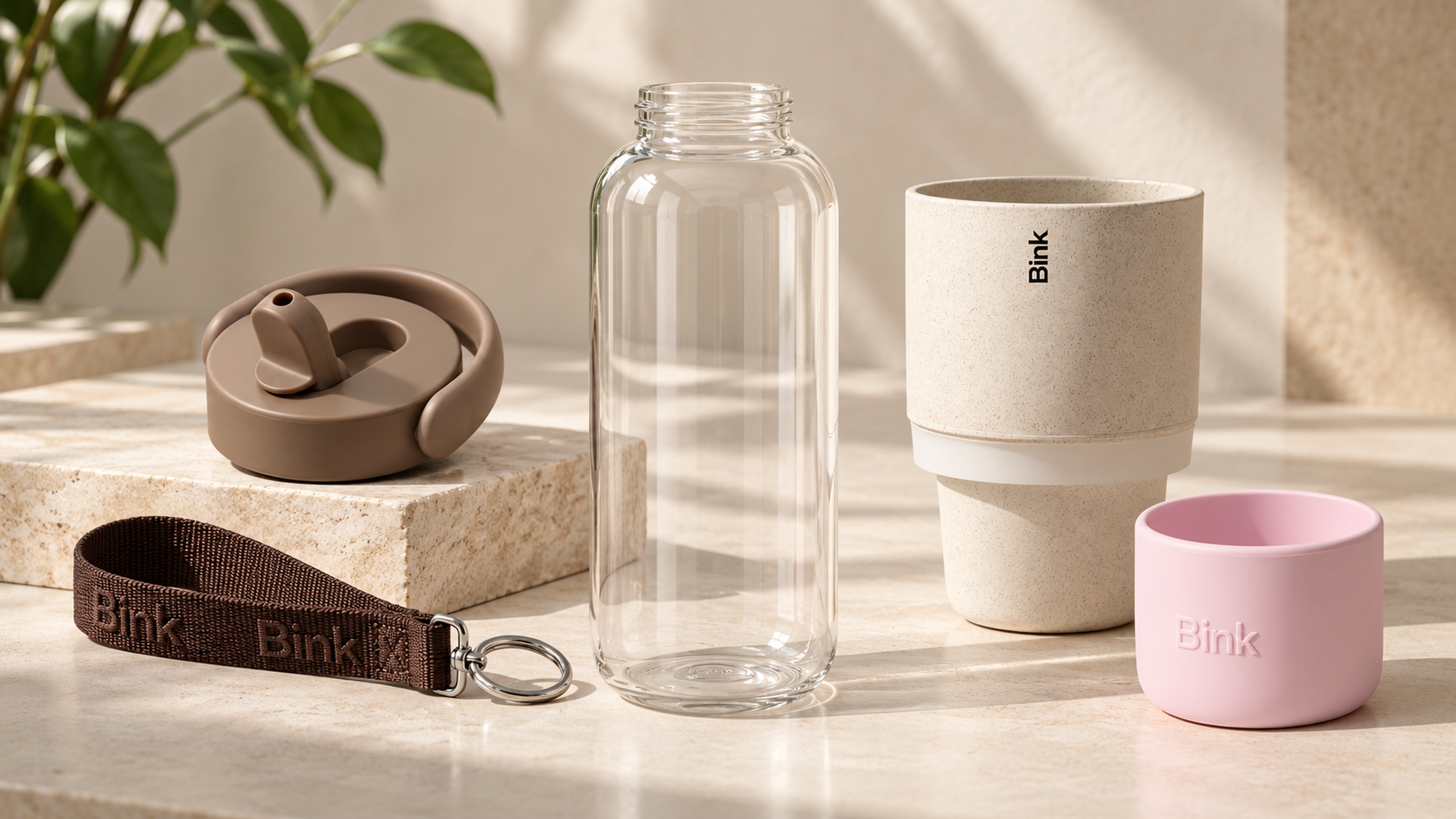
Bink also provides an accidental glass replacement program for qualifying purchases. According to its customer service information, eligible customers in the continental United States who accidentally break their glass bottle within the first 365 days can request a replacement glass body while retaining the original cap and sleeve. The stated replacement shipping fee is $12, and customers must provide relevant order information.
This arrangement should not be confused with an unrestricted lifetime guarantee. Bink separately provides a one-year warranty against defects in materials or workmanship, under which qualifying products may be repaired, replaced, or refunded. Accidental damage and manufacturing defects are different situations, with different conditions.
The advantage is not that glass becomes indestructible, but that customers have a potential route to keep using a product they already own. Replacement availability and the ability to purchase individual accessories can help reduce unnecessary full-bottle purchases. Buyers should still confirm the applicable terms, location restrictions, and compatibility before ordering replacement components.
Bink occupies a space where customers pay for more than the basic ability to carry drinking water. A less expensive reusable bottle can provide the same fundamental function, but Bink's proposition includes distinctive industrial design, borosilicate glass construction, silicone protection, hydration markings, and multiple cap options.
The brand's listed prices help illustrate its positioning. The Day Bottle Classic 27oz starts around $32, while the Day Bottle Flip Cap 27oz and Straw Cap versions are listed around $38. The smaller Day Bottle 21oz with Flip Cap is approximately $34, and the Big Bottle 36oz is around $42. Stainless steel options start around $36 for 24oz and $40 for 32oz configurations.
At these prices, choosing the right configuration is more important than automatically purchasing the most expensive option. Someone who enjoys a traditional drinking opening may be perfectly satisfied with the $32 Classic model. A buyer who strongly prefers a dedicated flip spout might consider the difference worthwhile, while a frequent commuter could find better everyday utility in a stainless steel or cup-holder-compatible design.
There is also the question of long-term ownership cost. Bink does not require a subscription or recurring filter replacements for its standard bottles, so there is no unavoidable annual refill expense. Optional purchases can still add up, however. A car cup-holder accessory is listed around $18, individual replacement caps have their own prices, and qualifying accidental glass replacement requests involve the stated shipping fee.
The brand also advertises 10% off when purchasing three items through its bundle program. This may appeal to households buying multiple bottles or customers adding genuinely useful accessories, but it is not necessarily better value for someone who only needs one product. Purchasing extra items solely to obtain a bundle discount can easily defeat the purpose of saving money.
Purchase conditions deserve similar attention. Bink lists a 30-day return window for unused products, with an $8 return-shipping deduction under its current published policy. Discounted items are final sale, and international returns are not accepted. Its U.S. checkout also advertises free shipping at a $100 order threshold. Buyers should verify the terms applicable to their location before completing a purchase.
Independent feedback adds useful perspective to this value discussion. Business Insider's hands-on coverage praised aspects of the Day Bottle's comfortable design and manageable feel compared with a much larger tumbler, while identifying car cup-holder compatibility, silicone maintenance, and limited temperature retention as practical compromises. These observations suggest that Bink's design advantages are meaningful, but they do not eliminate the need to choose carefully.
Ultimately, Bink offers the strongest value to customers who genuinely appreciate its combination of appearance, materials, and everyday convenience. For someone who already owns a suitable bottle and places little importance on design, replacing it may provide limited practical benefit. For buyers seeking a reusable bottle they will enjoy keeping nearby, Bink presents an appealing and increasingly versatile collection.
The most appealing thing about Bink is not a revolutionary technology or an exaggerated promise about hydration. It is the way thoughtful design, attractive materials, and small functional details come together in an ordinary object that people use repeatedly.
Whether you prefer the original glass Day Bottle, a compact 21oz version for commuting, or an insulated stainless steel model, the collection offers enough variety to make a more personalized decision.
If the design fits your lifestyle, you can explore Bink to compare current colors, bottle sizes, cap configurations, and available offers.
The best choice is not necessarily the largest or most expensive bottle. It is the one that feels natural to reach for, comfortable to use, and practical enough to remain part of your everyday routine.
Verdict
Bink Made succeeds by making reusable hydration feel less like a chore and more like a natural part of everyday life. Its distinctive silicone-covered glass bottles combine appealing colors, intuitive hydration markings, and practical drinking options in a design that feels thoughtfully considered. The Day Bottle 27oz is an especially compelling choice for people who value glass construction and enjoy keeping water within easy reach throughout the day. The biggest limitations involve portability, temperature retention, and the additional care required by glass. However, Bink addresses different preferences through smaller cup-holder-friendly bottles, alternative caps, replacement components, and insulated stainless steel models. Bink is particularly appealing to design-conscious buyers who want an attractive, functional everyday bottle. It is less essential for anyone who prioritizes maximum ruggedness or simply needs the cheapest way to carry water.