Rlaarlo is one of those RC brands that becomes harder to describe the more closely you look at its current lineup. If your first impression came from one of its smaller brushless cars, it was easy to place the company in the familiar category of affordable RC manufacturers offering eye-catching speed specifications, plenty of metal hardware and aggressive pricing. That description still captures part of the appeal, but it no longer explains the direction of the brand.
The current range extends from compact machines such as the X12S and Omni-Terminator to customizable rally platforms, 1/8 buggies, licensed large-scale vehicles and specialist crawlers. More importantly, Rlaarlo increasingly sells its cars as platforms rather than sealed products. Some are available as complete RTR packages, some as rollers for owners who already have electronics, and others as kits designed for people who actively want to build, tune and experiment.
That makes a modern Rlaarlo review more complicated than asking whether the cars are fast enough for the money. They clearly can be fast. The more meaningful questions are what the chassis is like underneath the body, how much tuning freedom the owner gets, whether parts remain available after a crash, how much a build really costs once batteries and electronics are considered, and whether Rlaarlo's direct-to-consumer ownership experience is mature enough to support increasingly expensive models.
Based on the current product range, official specifications, parts catalog, warranty policies and independent owner discussions, Rlaarlo has made significant progress on those questions. It is not perfect, and buyers should understand the tradeoffs before ordering, but the brand now deserves to be evaluated as a serious hobby platform rather than simply a source of inexpensive speed.
1. Rlaarlo Is No Longer Just Playing the Budget RC Game
Rlaarlo still knows exactly why value-conscious hobbyists notice the brand. The X12S is listed at $229.99 and combines a compact 1/12 chassis with a 2845-3600KV brushless motor, 45A ESC and included 3S battery. The Omni-Terminator Carbon Fiber version sits at $279.99 and adds a more substantial monster-truck format, carbon-fiber components, gyro assistance and a center-differential drivetrain. Those prices make both products easy to compare with the growing number of high-performance direct-to-consumer RC cars.
What makes Rlaarlo more interesting now is what happens as you move upward. The XTS-F10 carbon RTR is listed at $299.99. The Dragon Scale Knight DSK RTR reaches $549.99. The officially licensed Mitsubishi EVO 6.5 TME SLEVO-07 is $649.99, while other parts of the range now extend even further into large-scale and specialist territory. Rlaarlo is no longer operating inside one narrow budget bracket.
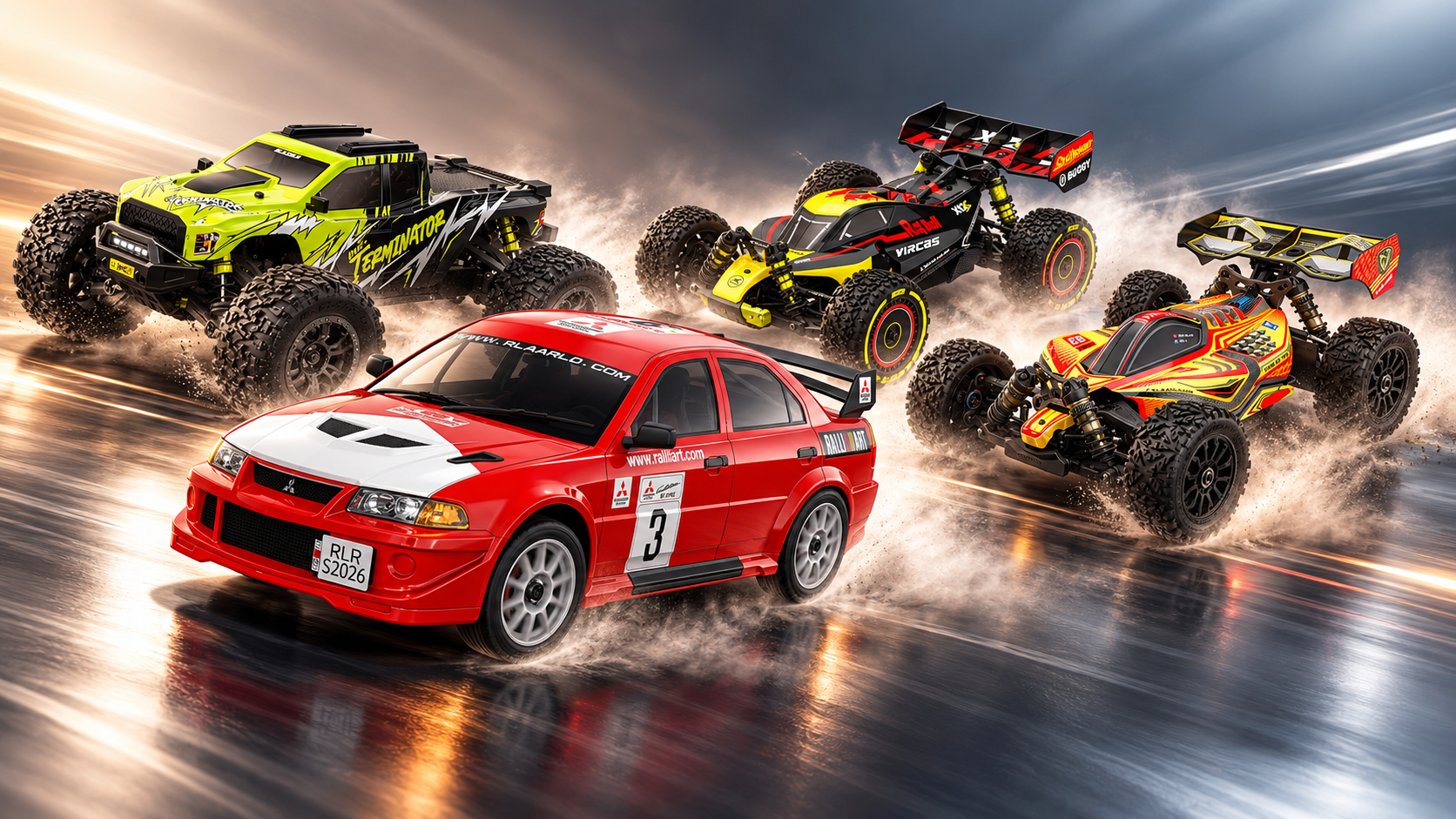
That matters because the buying standard changes with price. A $200 RC car can create a strong first impression simply by offering impressive acceleration, metal components and an included battery. Once the price moves beyond $500, experienced hobbyists start asking harder questions. Is the chassis easy to work on? Can suspension geometry be adjusted? Is the drivetrain designed for sustained power rather than one dramatic speed run? Can you get replacement parts without replacing the whole car? Does the platform justify keeping for several seasons?
Rlaarlo appears increasingly aware of those questions. The newer DSK in particular is marketed around chassis flexibility and competition-oriented hardware rather than simply top speed. The SLEVO-07 pushes in a different direction with licensed scale realism, a large physical footprint and premium aluminum construction. The XTS family places more emphasis on body compatibility and modular layouts. These are different interpretations of value, and that is a major change from a simple "more speed for less money" strategy.
There is another sign of the shift: Rlaarlo's official catalog now spans dozens of vehicle listings and more than 1,400 parts and accessories. That does not automatically place it on the same level as RC companies with decades of dealer support, but it shows that the company is increasingly trying to build an ecosystem around the cars.
For shoppers, that means Rlaarlo deserves to be evaluated model by model. Its lower-priced cars can still deliver the straightforward performance-per-dollar proposition that made the company attractive, while the more expensive products should be judged on engineering, tuning freedom and long-term ownership. Treating every Rlaarlo as merely "budget RC" now undersells what the brand is trying to become.
2. The Lineup Makes More Sense When You Choose by Driving Style
The easiest way to get lost on Rlaarlo's website is to compare models only by speed, motor size or price. A better approach is to start with where you actually intend to drive. The difference between a compact buggy, monster truck, rally chassis and 1/8 race-style buggy matters far more than a few extra kilometers per hour on a specification sheet.
The X12S is best understood as a compact performance buggy. Its 1/12 scale makes it easier to store and transport than a large 1/8 or 1/7 machine, while the included 3S system gives it considerably more performance than its small footprint might suggest. Rlaarlo advertises speeds in the 60 to 90 km/h range depending on setup. That sounds exciting, but the real appeal is having a light, compact 4WD car that can deliver serious acceleration without requiring a large storage area or dedicated track.
The downside of compact scale is that speed becomes difficult to use very quickly. A small chassis covers ground faster relative to its own size, reacts more sharply to surface imperfections and becomes harder to see at distance. A beginner may therefore enjoy the X12S more at reduced throttle than by constantly chasing the highest possible speed.
The Omni-Terminator shifts the focus toward general bashing. Its monster-truck proportions, center differential and wider stance make it better suited to mixed surfaces, rougher terrain and the kind of driving where jumps and imperfect landings are part of the experience. It remains relatively compact, which is useful for buyers who want a capable basher without committing to the physical size and battery requirements of a full 1/8 truck.
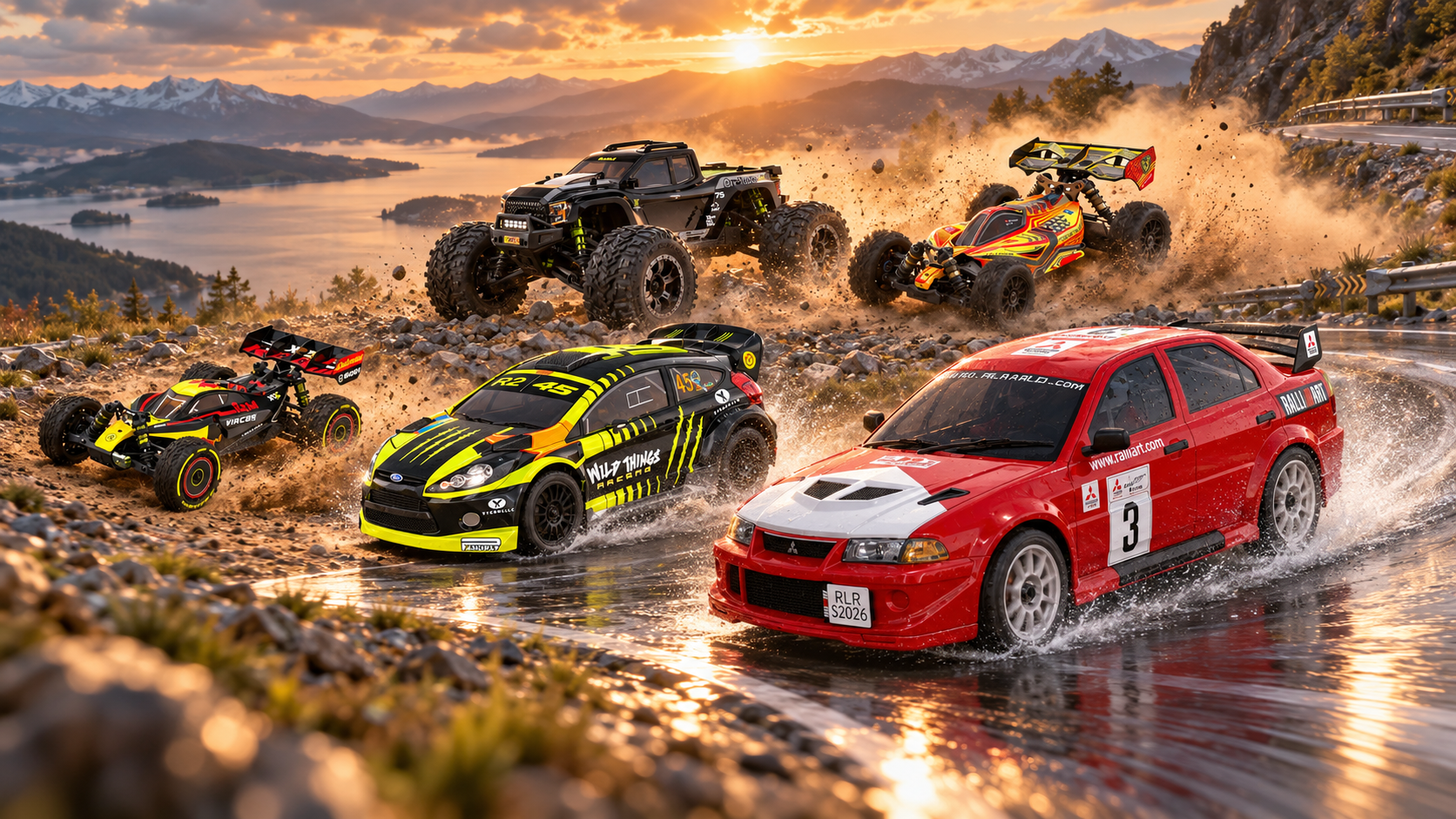
The XTS-F10 is where things become more interesting for rally fans. The car uses a 257 mm wheelbase and can be adapted with Rlaarlo's 190 mm conversion kit, giving owners more options for aftermarket body shells. It is also offered in multiple versions, including metal RTR, carbon RTR and carbon roller. That flexibility makes it less of a fixed rally car and more of a chassis that can become a longer-term project.
The Dragon Scale Knight is a bigger step again. At 1/8 scale, the DSK is physically larger, heavier and more demanding in terms of space, batteries and maintenance. It also gives the owner significantly more setup freedom. This is the Rlaarlo model that makes the most sense for someone who actively enjoys tuning rather than simply driving.
At the other end of the experience is the SLEVO-07, a 1/7 Mitsubishi EVO 6.5 TME recreation. It is not merely an enlarged XTS. The 646 mm-long body, 3 mm 7075-T6 aluminum chassis, large shocks, 180A ESC and 4274 motor give it a very different physical character. It needs more space, costs more to buy and will naturally make tires, bodies and replacement components more expensive. In return, it offers scale presence that a compact RC car simply cannot reproduce.
This is why asking "What is the best Rlaarlo?" is less useful than it sounds. Someone with a small paved parking area may get more enjoyment from the XTS-F10 than the larger SLEVO. A driver with rough dirt and jumps may prefer the Omni-Terminator. A hobbyist who spends as much time at the workbench as behind the transmitter may get more long-term satisfaction from the DSK. The best value comes from matching the platform to the environment, not buying the most expensive car in the catalog.
3. The Chassis Matter More Than the Headline Speed Numbers
High speed is useful marketing because it gives buyers one simple figure to compare. RC cars are much more complicated than that figure suggests. Once the novelty of the first high-speed pass disappears, handling quality is influenced by weight distribution, suspension geometry, shock setup, differential behavior, steering design, tire choice and how smoothly power reaches the ground.
This is where Rlaarlo's more recent engineering becomes significantly more interesting.
The Dragon Scale Knight is the clearest example. The DSK is not built around one fixed layout. Rlaarlo designed the chassis to support both front- and rear-motor arrangements, allowing the owner to change weight distribution according to driving style and surface. It also supports two steering configurations, including C-hub and pivot-ball styles, giving more serious tuners another mechanical variable to work with.
The chassis can also accommodate sensored and sensorless brushless electronics. The RTR version uses Rlaarlo's 4274-2050KV sensorless motor and 180A sensorless ESC, while a 4278-2050KV sensored motor and 160A sensored ESC are available as optional upgrades. A sensored setup can provide smoother low-speed response and more precise throttle behavior, which becomes more relevant on a track than during simple high-speed bashing.
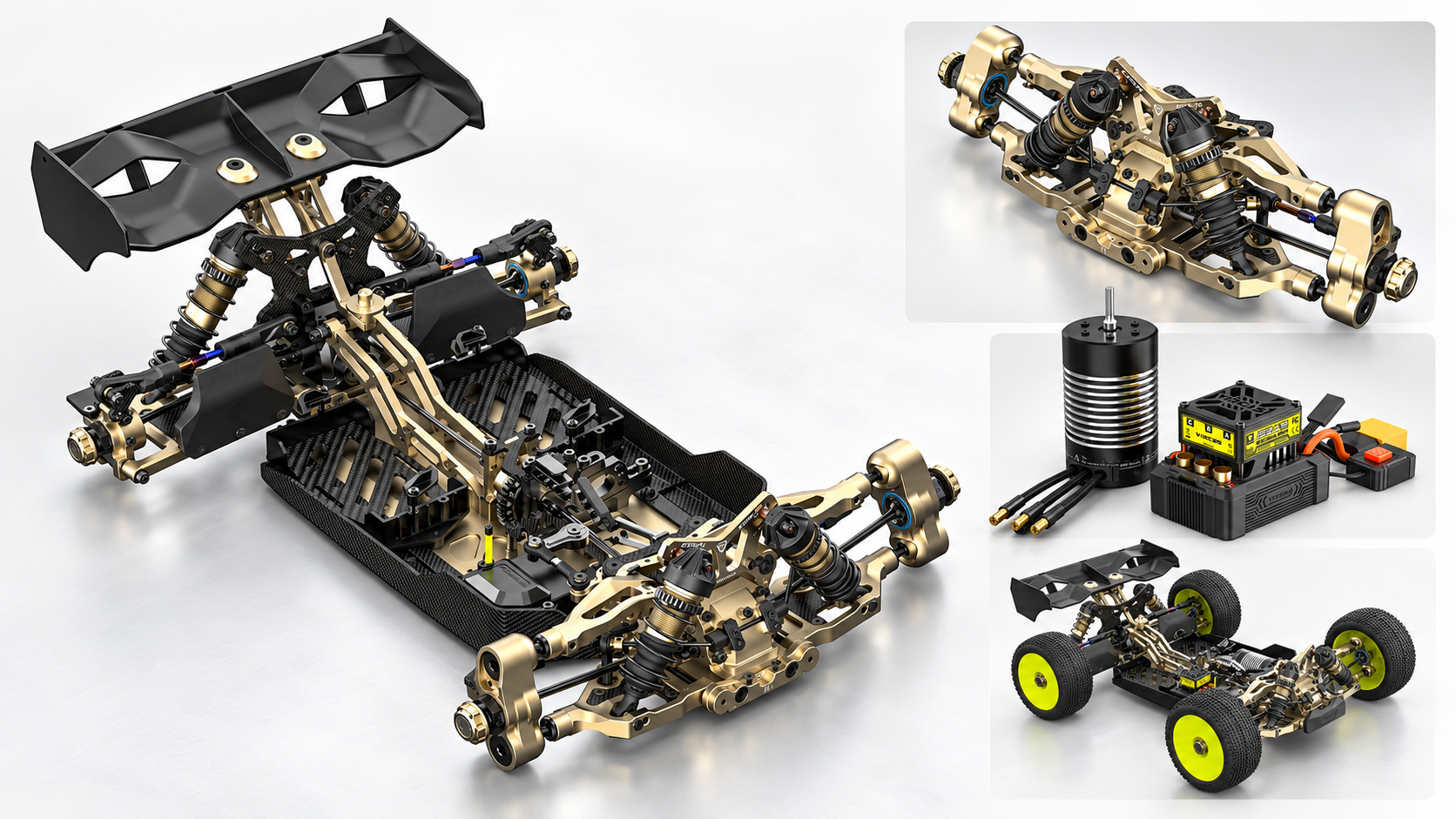
That level of configurability is meaningful because a good hobby-grade chassis should leave room for the owner to learn. A beginner may run the DSK largely as delivered and simply adjust ride height or shock position. Later, the same owner can experiment with tires, differential setup, weight distribution, electronics or steering geometry without immediately replacing the entire vehicle.
Independent racing feedback also provides some useful perspective. Owners who have taken the DSK into competition describe considerable potential, but some also note that it may require setup work to feel as precise as long-established race platforms from companies with deeper competition histories. That is an important distinction. Rlaarlo has built a platform with serious adjustment potential, but purchasing adjustability and knowing how to use it are not the same thing.
The XTS-F10 demonstrates the same design philosophy in a simpler package. Its clipless quick-release body system replaces traditional exposed body posts, while the internal layout provides multiple electronics mounting areas and a relatively clean chassis arrangement. The 257 mm wheelbase can be modified using Rlaarlo's conversion hardware to accept more common 190 mm shells, which creates room for personalization long after the stock body has lost its novelty.
Even the Omni-Terminator deserves credit here. A center differential in this class helps distribute power dynamically between the front and rear of the vehicle. That does not automatically make the car indestructible, but it shows more thought than simply fitting the most powerful motor possible into a basic chassis.
This is the part of Rlaarlo that gets overlooked when discussion focuses only on top-speed claims. The company's better platforms are increasingly interesting because of what sits under the body, not because of the number printed in a marketing graphic. For an enthusiast buyer, that is a much more sustainable reason to own the car.
4. RTR, Roller or Kit Can Completely Change the Real Cost of Ownership
Rlaarlo's growing selection of RTR, roller and kit versions is one of its strongest enthusiast features, but it can also confuse buyers who compare prices too quickly.
An RTR, or Ready-to-Run model, is the simplest option. Electronics are already selected and installed, the drivetrain is assembled and the buyer can usually begin with minimal setup beyond charging the battery, checking hardware and reading the manual. For a first hobby-grade RC, this is often the most sensible route because it reduces the number of compatibility decisions.
The DSK RTR is currently listed at $549.99. That price includes Rlaarlo's sensorless motor and ESC package, servo and radio system. Someone who wants to experience the platform without building an entire electronics package has a relatively clear purchase cost.
The DSK Roller, currently listed at $449.99, removes the electronics. That $100 difference can look attractive until you calculate what must be added. A suitable motor, ESC, steering servo, transmitter, receiver and LiPo battery can easily exceed the amount saved, particularly if you choose competition-oriented components.
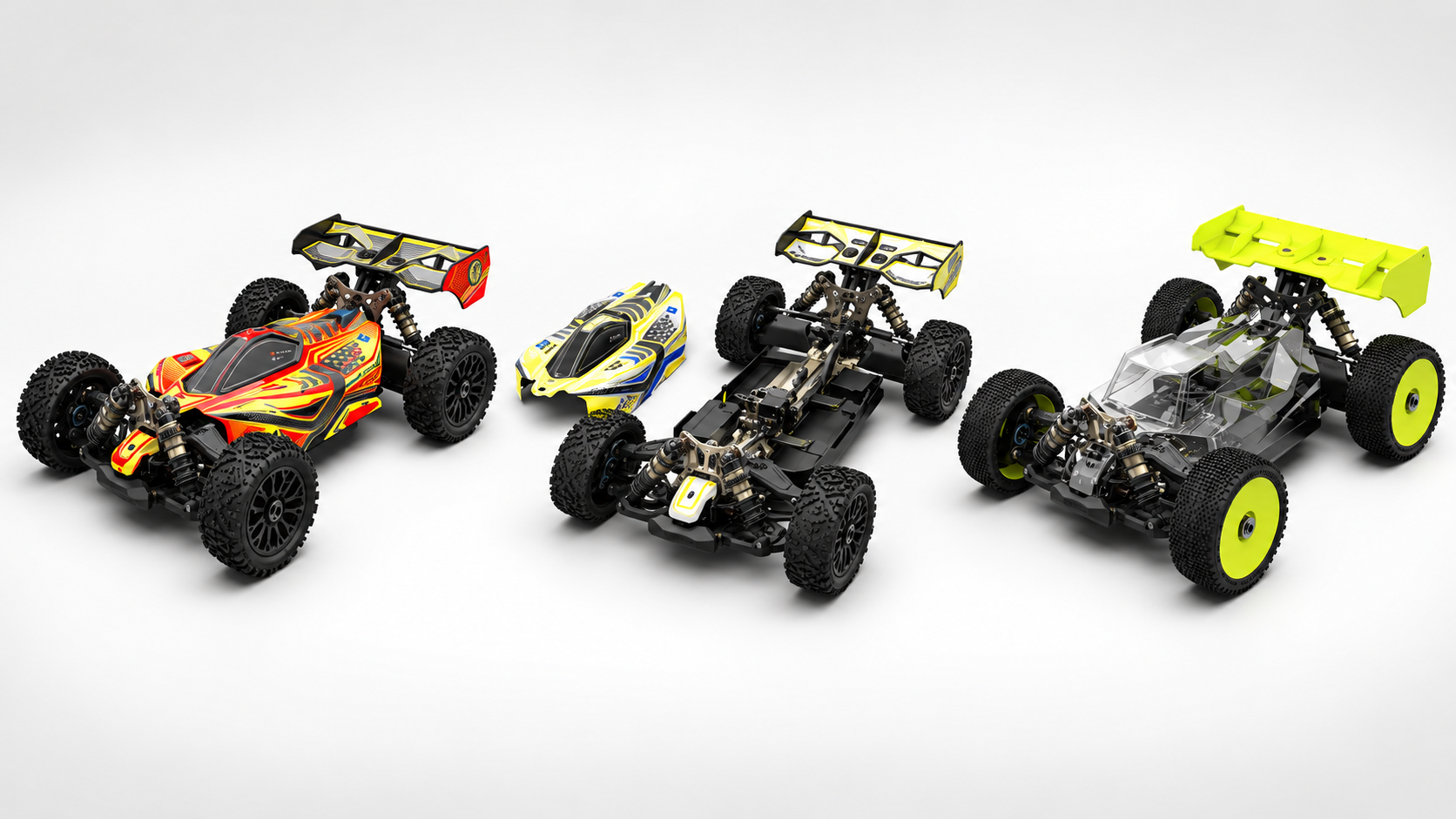
The roller therefore makes the most financial sense for a very specific buyer. Perhaps you already own a compatible radio system. Maybe you have a high-quality servo and ESC from another 1/8 build. Or perhaps you simply know that the stock electronics would be removed immediately. In those situations, paying for a complete RTR can actually be wasteful.
The DSK Kit is different again. It is also listed at $549.99, but it is aimed at people who see assembly as part of the hobby. The kit requires building, body preparation and electronics installation, while also including more upgrade-oriented components than the standard RTR. This version is less about saving money and more about knowing the chassis intimately before it reaches the track.
XTS-F10 follows the same pattern at a lower price. The metal RTR is listed at $269.99, the carbon RTR at $299.99 and the carbon roller at $229.99. If you already own the electronics, that roller can become a very appealing starting point. If you need to buy everything from scratch, the complete RTR may be the better deal even though its sticker price is higher.
Battery and charging costs also belong in this calculation. A first-time buyer may need a suitable LiPo charger, charging bag, spare battery and perhaps a LiPo voltage checker. Large-scale cars can demand more expensive batteries than compact models, and running several packs per session changes ownership cost more than many buyers expect.
The same principle applies to upgrades. Aluminum parts, carbon components, upgraded shocks and higher-end electronics can quickly transform a reasonably priced roller into a very expensive project. That is not necessarily a negative. For many enthusiasts, gradual modification is part of the enjoyment. It becomes a problem only when a buyer assumes the roller price represents the finished cost.
Before choosing a version, it is worth checking the current configurations on Rlaarlo and making a complete parts list. Compare the cost of the RTR against the roller plus everything you genuinely need. Rlaarlo gives buyers unusually good freedom here, but that freedom rewards people who calculate before ordering.
5. Rlaarlo's Most Important Feature May Be What Happens After the First Crash
Speed is exciting during the first week. Parts support matters during the first year.
Almost every enthusiast RC car eventually needs maintenance. Bearings wear. Bodies crack. Tires lose tread. Screws loosen. Suspension parts take impacts. Differential components and drive cups experience wear. A bad landing can turn a perfectly functioning car into a collection of replacement-part numbers in a matter of seconds.
This is why the depth of Rlaarlo's parts catalog is one of the strongest arguments in favor of the brand. At the time of research, the official RC parts section contained 1,451 products, with more than 1,400 marked in stock. The catalog included more than 1,200 standard parts and over 200 optional parts, covering chassis components, suspension, steering, drivetrain, electronics, wheels and tires.
The numbers become more useful when filtered by model. The DSK alone has more than 200 associated listings. XTS-F10 has more than 160, while other current platforms also have substantial dedicated inventories. These include both normal replacement components and optional aluminum, carbon-fiber or performance upgrades.
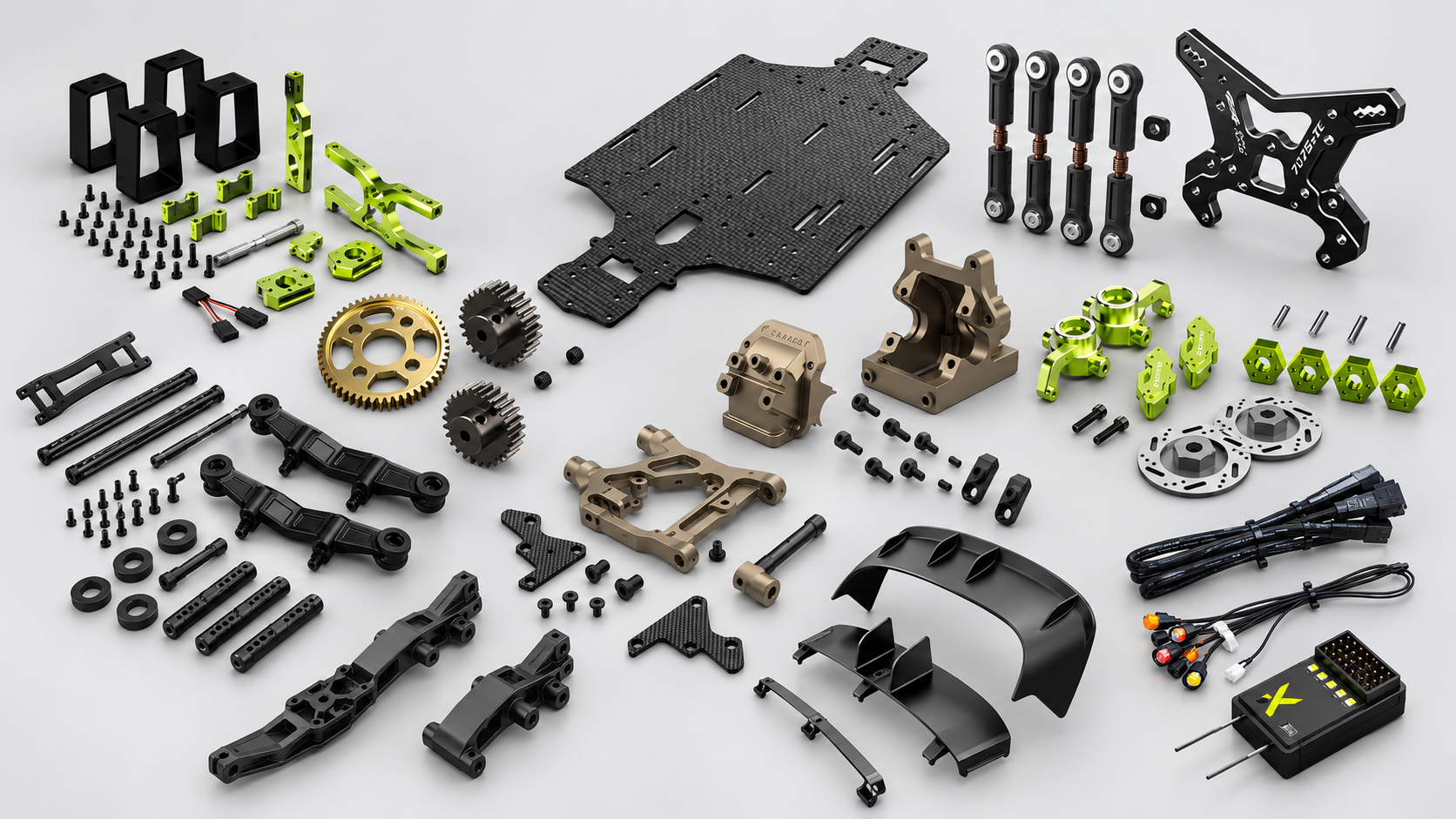
That matters because repairability changes the economics of ownership. A $250 RC car with poor parts support can become effectively disposable after one unusual break. A more expensive platform with individually available arms, hubs, gears, shock components and chassis hardware can remain useful much longer.
Rlaarlo also sells optional upgrades rather than forcing every owner to buy them as standard. That is usually the better approach. Aluminum components can be useful in certain high-load areas, but replacing every flexible plastic part with metal can simply move impact force somewhere more expensive. Experienced owners often upgrade strategically rather than treating every metal component as automatically better.
Independent owner discussions show both sides of the ownership experience. Some customers have recently described responsive customer service, with Rlaarlo requesting photos or videos of a fault, diagnosing the problem and shipping replacement components. Those reports suggest the after-sales process can work well when the issue is documented clearly.
At the same time, other owners have reported longer waits, unavailable parts or situations where a car remained off the road until a direct-shipped replacement arrived. That difference is important. A large online catalog does not automatically equal same-day parts availability.
Owners of brands with extensive hobby-shop distribution may be accustomed to driving to a local store and buying an arm, hub or spur gear immediately. Rlaarlo's model is more dependent on direct ordering, regional warehouses and third-party availability. Depending on your location, that can turn a simple repair into several days or weeks of downtime.
The practical solution is not to avoid the brand. It is to understand your own tolerance for downtime. If you plan to bash hard, keeping inexpensive high-risk components on hand can be sensible. Arms, wheel hardware, body clips where applicable, bearings and certain drivetrain parts are not expensive compared with losing several weekends of driving.
This is also why Rlaarlo increasingly feels like a hobby platform rather than a toy. The brand expects owners to repair and maintain these cars, and the catalog supports that expectation far better than many unfamiliar buyers might assume.
6. The SLEVO-07 Shows How Far Rlaarlo Has Moved Upmarket
Nothing in the current lineup challenges the old perception of Rlaarlo more clearly than the SLEVO-07. At $649.99, the officially licensed 1/7 Mitsubishi EVO 6.5 Tommi Mäkinen Edition is not trying to win simply by being inexpensive. It has to compete on physical presence, engineering, presentation and the overall quality of the ownership experience.
The scale alone changes everything. The SLEVO measures 646 mm long, with a 374 mm wheelbase and a 272 mm width. That makes it a substantial machine rather than an enlarged toy. Large scale can provide better visual realism and a more planted presence on open surfaces, but it also demands more storage space and a larger driving area.
Underneath the body is a 3 mm 7075-T6 aluminum chassis, 5 mm 7075 aluminum shock mounts and 16 mm oil-filled shocks. Rlaarlo pairs the car with a 180A brushless ESC, 4274-2050KV motor, 45 kg coreless servo and six-channel radio with gyro assistance. The battery tray supports 2S through 6S LiPo configurations, giving the owner significant flexibility over power level.
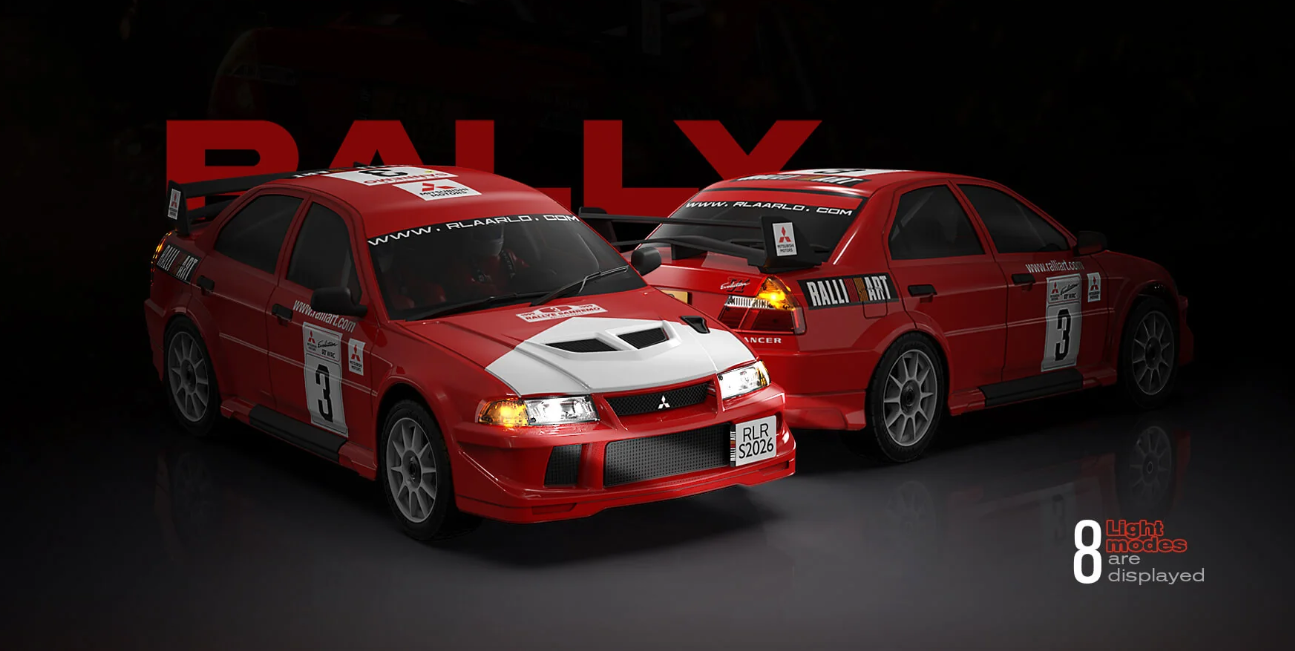
The body is equally important to the value proposition. Rlaarlo uses an officially licensed Mitsubishi design with more than 30 scale-style details and a synchronized lighting system with eight modes. For a buyer attracted to rally history and scale appearance, those details provide value that cannot be measured by acceleration alone.
This is where Rlaarlo begins competing for a very different type of purchase. A $650 RC car is often bought partly because the owner wants to look at it, customize it and keep it for years. A realistic body, large wheels, visible suspension hardware and licensed details matter more at this level.
The SLEVO also shows how premium ownership costs rise with scale. A replacement complete exterior body is listed at $69.99, while a clear 1.5 mm PC rally body is $129.99. A replacement high-torque servo is $69.99, and optional aluminum or drivetrain pieces add further cost. None of that is unusual for large-scale RC, but it illustrates why sticker price should never be the only budget number considered.
The Dragon Scale Knight reaches the premium end through a different route. It is less about licensed scale realism and more about mechanical architecture. The DSK offers configurable motor placement, steering options, sensored electronics compatibility and a large upgrade catalog. In other words, Rlaarlo now has at least two distinct premium strategies: the SLEVO sells scale presence while the DSK sells tuning depth.
That is a much healthier product strategy than trying to make every model compete using one speed number. It also raises expectations. Buyers spending $500 to $650 will naturally compare Rlaarlo against established manufacturers with stronger racing histories, broader dealer networks and mature aftermarket ecosystems. At this price, Rlaarlo has to be good in ways that extend beyond impressive specifications.
The good news is that the hardware increasingly supports that ambition. The remaining question is whether the service and ownership infrastructure can mature at the same pace.
7. Where Rlaarlo Still Asks the Buyer for Some Patience
This is the section where the brand deserves a little more scrutiny.
Rlaarlo currently provides a 90-day warranty from the date of delivery on its RC models, together with long-term official technical support. If a qualifying defect is identified during the warranty period, the company states that it will provide the part or parts needed to correct the problem. If the required component is unavailable, Rlaarlo may offer compensation in another form such as a coupon.
The warranty does not cover normal cosmetic damage, accidents, abuse, improper maintenance, unauthorized modifications or repairs outside the terms of the policy. That is fairly typical in principle for RC products because crashes and user modification are part of the hobby, but the 90-day duration itself is not particularly long.
Rlaarlo's warranty process also expects the buyer to participate in diagnosis. Customers may need to provide an order number, purchase proof and clear photos or video showing the issue. That can actually be efficient when the fault is obvious, and recent owner reports describe successful experiences using exactly this process.
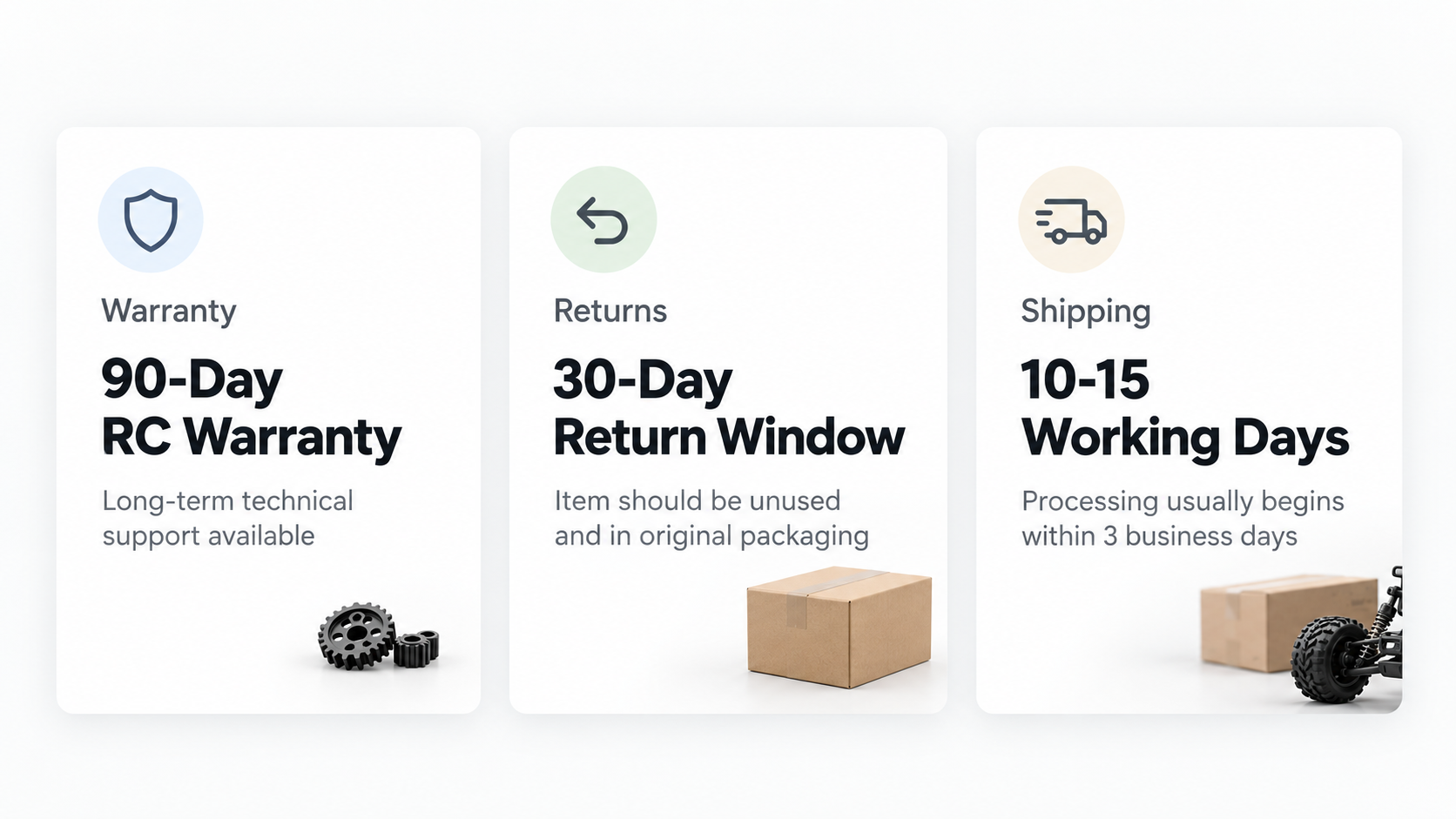
The standard return window is 30 days from delivery. Products generally need to be unused, undamaged, complete and returned in the original packaging. Customers normally pay return shipping unless the item arrived damaged or defective, and Rlaarlo reserves the right to reduce a refund or apply a restocking charge if returned products are incomplete or no longer in original condition.
That is particularly relevant with RC cars because proper evaluation usually means actually driving the product. Once a car has been run outdoors, scratched underneath or exposed to dirt, it may no longer qualify as a simple unused return. Buyers should therefore inspect the car carefully before the first run. Check screws, suspension movement, wheel nuts, drivetrain rotation and visible electronics installation before putting the vehicle under load.
Independent owner experiences reinforce the value of that inspection. Rlaarlo forums and broader RC communities include owners who praise newer vehicles such as the DSK and XTS-F10 for build quality and driving experience. They also include reports of loose hardware, electronics problems, strong brake settings, damaged parts or inconsistent finishing. These reports do not prove that such problems are common, but they demonstrate that a pre-run inspection is worthwhile even on an RTR model.
The DSK also highlights another limitation. Rlaarlo has clearly developed a more serious competition-oriented chassis, but it does not yet have the racing history of companies whose platforms have been refined across many generations of organized competition. Owners who race the DSK have reported promising handling after tuning while also identifying setup work and occasional hardware issues. That is not necessarily a failure. It is evidence that Rlaarlo is entering a category where experienced racers have very demanding standards.
Shipping is another consideration. Rlaarlo generally states that order processing takes around one to three working days, while newly released products may require seven to twelve working days before dispatch. Standard delivery estimates are commonly around seven to fifteen working days depending on region. Customs, remote-area charges and local logistics can extend that further.
International buyers may also be responsible for duties, taxes or other import costs. Those charges are easy to overlook when comparing the website price with a locally stocked competitor.
None of these issues automatically makes Rlaarlo a poor purchase. The more accurate conclusion is that the ownership experience still favors buyers who are comfortable with a little troubleshooting and waiting. Someone who expects every problem to be solved immediately by a local store may find the direct-to-consumer model frustrating. Someone accustomed to maintaining RC cars, identifying part numbers and communicating with online support may consider it perfectly manageable.
8. Rlaarlo Makes the Most Sense for Owners Who Want a Platform, Not Just a Product
After looking across the current lineup, Rlaarlo's strongest identity becomes fairly clear. The brand is most compelling for people who want to participate in the ownership process.
That does not mean every customer needs to build a DSK kit from individual parts. An RTR Omni-Terminator or XTS-F10 can still be an easy entry into hobby-grade RC. The difference is that the car does not have to remain exactly as it arrived.
An XTS-F10 owner can experiment with bodies, wheels or chassis configuration. A DSK owner can explore steering geometry, motor placement, electronics and suspension setup. SLEVO buyers have a growing range of scale and mechanical replacement parts. Across the catalog, standard components sit alongside aluminum, carbon-fiber and other optional upgrades.
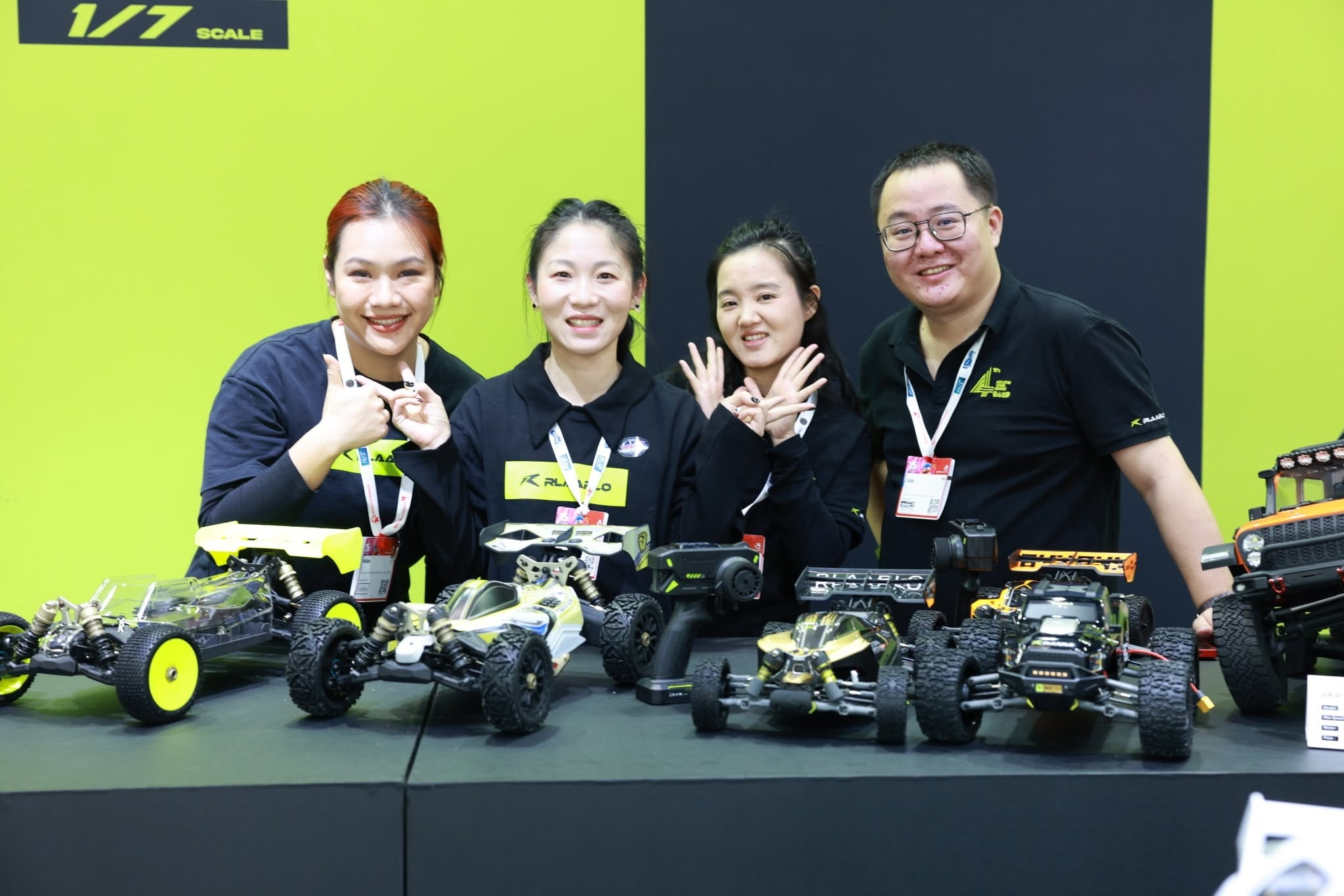
For enthusiasts, that creates a more durable relationship with the product. A car can change as the owner's knowledge improves. The first modification might be better tires. Later it could be shock oil, springs, differential setup, servo, gearing or electronics. Eventually the owner may move from RTR convenience into a roller or kit because the process of selecting components has become part of the enjoyment.
There is also genuine value in learning to repair rather than replace. RC cars are unusually good mechanical teaching tools because the relationship between setup and behavior is visible. Change tires and traction changes. Alter ride height and weight transfer changes. Change differential setup and corner behavior changes. Replace a worn component and the improvement is immediately noticeable. Rlaarlo's parts depth supports that kind of ownership better than its early brand image might suggest.
Beginners can benefit from this too, provided expectations are sensible. A powerful 3S or 6S capable vehicle is not automatically better for a new driver if the first full-throttle run ends against a curb. Starting at reduced throttle, learning braking distance and understanding surface grip can save a surprising amount of money.
The buyers who may get less value from Rlaarlo are those who want the most established local dealer network possible. If your main priority is walking into a nearby hobby shop and finding every replacement component immediately, local availability should be checked before buying. A strong online catalog is not identical to a mature retail network.
Similarly, buyers who never intend to tune, maintain or modify anything may not benefit fully from the brand's deeper engineering. They may still enjoy the RTR cars, but much of what differentiates the DSK, XTS and other enthusiast-oriented platforms would go unused.
That is why Rlaarlo works best when you view the car as the beginning of the hobby rather than the end of the purchase. The company now offers enough chassis depth, repairability and upgrade choice to reward owners who want to learn what is happening underneath the body.
The most encouraging part is the direction of travel. Earlier Rlaarlo products built attention through accessible speed. Platforms such as the Omni-Terminator and XTS-F10 improved the balance between performance and chassis quality. The DSK pushes much further toward serious tunability, while the SLEVO shows that Rlaarlo is willing to compete at higher prices with licensed design and premium-scale hardware.
The remaining weaknesses are mostly around the ecosystem surrounding those machines rather than a lack of ambition in the machines themselves. Warranty length could be stronger. Regional parts distribution can improve. Quality consistency becomes even more important as prices rise. But those limitations now sit beside a product range that has become much more credible.
For a buyer who enjoys driving, wrenching and gradually making a car their own, Rlaarlo has become one of the more interesting direct-to-consumer RC brands to watch.
Choose Your Rlaarlo Around the Way You Actually Use RC Cars
The most expensive Rlaarlo is not automatically the best one, and the fastest specification is not necessarily the most useful. Choosing well starts with something much simpler: where will you drive?
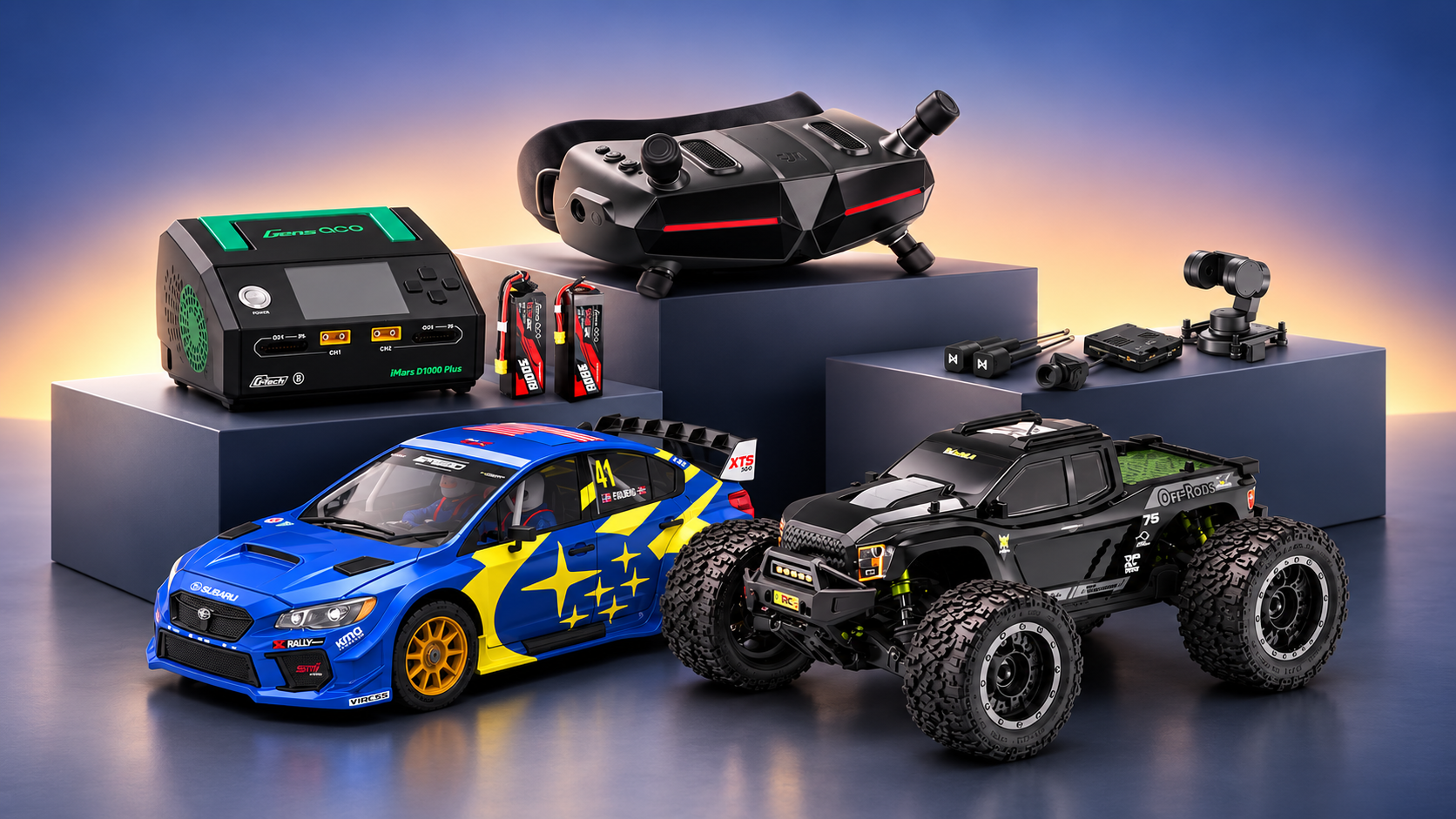
If you want compact brushless performance and easy storage, the X12S is the obvious starting point. If rougher bashing and jumps matter more, the Omni-Terminator makes more sense. Rally fans who value customization have a strong reason to look at the XTS-F10. Buyers who actively enjoy setup experimentation and serious chassis work should spend more time with the DSK. The SLEVO-07 is for someone who specifically wants the visual presence, licensed body and mechanical scale of a large 1/7 rally car.
The second decision is how much of the build you want Rlaarlo to complete for you. RTR is generally the safest value for newer hobbyists. A roller becomes more attractive when you already own compatible electronics or want complete control over the power system. A kit is primarily for someone who sees assembly itself as part of the hobby.
Finally, budget beyond the vehicle. Think about batteries, charging equipment, spare tires, likely wear parts and the occasional upgrade. This is especially important with larger platforms, where individual components naturally cost more.
You can check Rlaarlo's current models, configurations and pricing here before deciding which platform fits your driving style. The brand now offers enough variety that choosing the right Rlaarlo matters far more than simply choosing the fastest one.